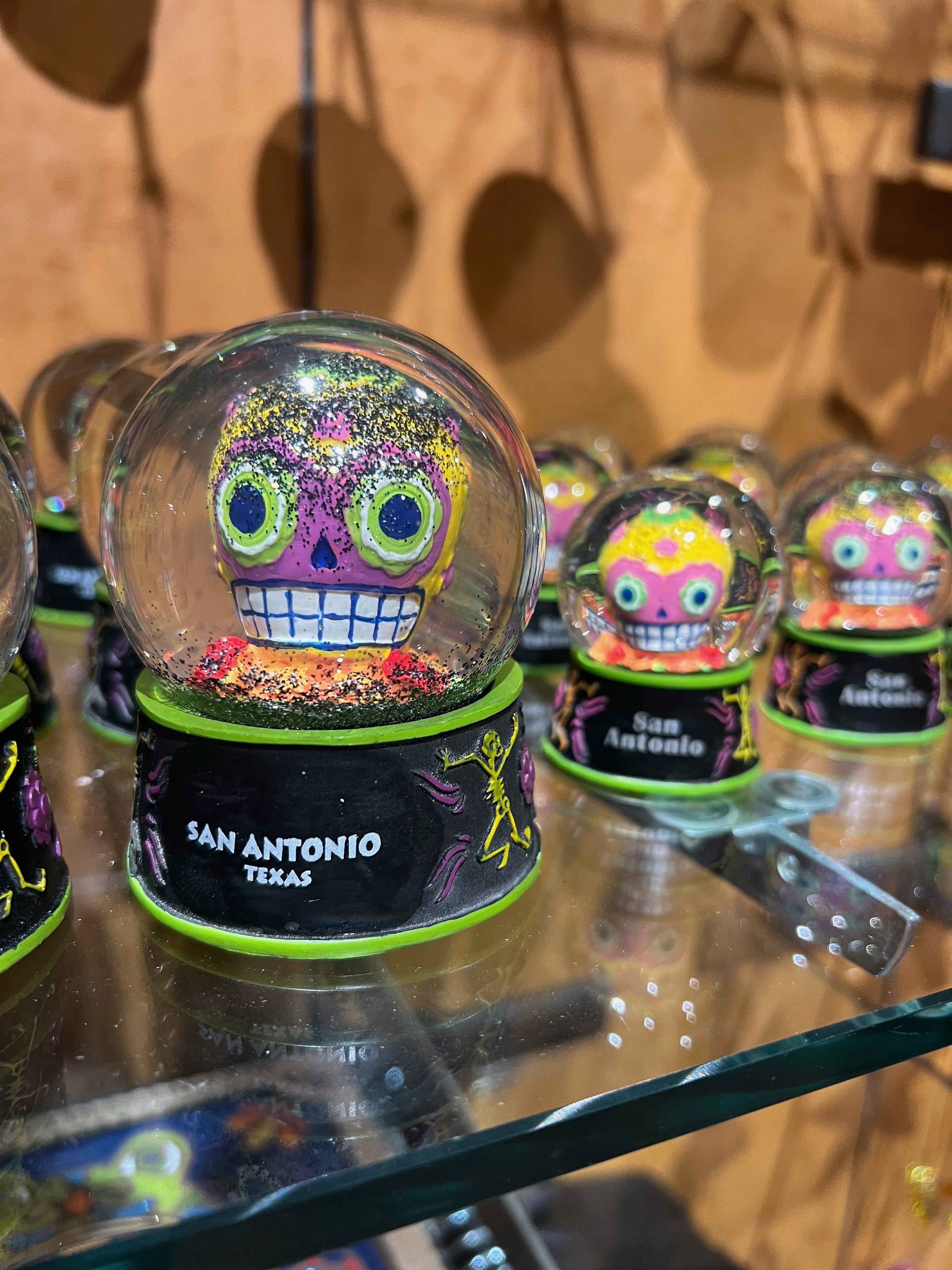
52: The Unshakeable Allure of Snow Globes
“I think on a basic level snow globes are magical and they provide a quiet, contemplative uncomplicated place to ponder,” says Liz Ross, co-founder of CoolSnowGlobes, which sells artful contemporary glass orbs holding beachscapes, autumn trees, and city skylines. “When you turn them upside down and then watch the snow settle they reveal the scene and calm you down.”
So where did snow globes come from, and why are travelers still buying them?
Snow globes drift into Europe
The first snow globes were probably produced in Europe in the 1870s. One of the oldest surviving examples, made in 1889 to celebrate the debut of the Eiffel Tower, is on view at the Bergstrom Mahler Museum of Glass in Neenah, Wisconsin.
The Wiener Schneekugel (Original Vienna Snow Globe Manufactory) got into the blizzard-in-a-glass-ball business in 1900. Its founder, inventor Erwin Perzy, was looking for ways to brighten then-new filament lightbulbs. He filled the round glass bulbs with things he thought might improve reflectivity—ground glass, semolina, rocks. Nothing lit up the bulbs, but when he tipped filled the globes with water and tipped them over, the flakey substances lazily fell to the bottom mimicking—aha!—snow.
Perzy inserted a tiny metal model of a church into one orb, topped it up with water, magnesium powder, and rock, and patented his schneekugel (snow orb). His descendants still craft and sell snow globes in Vienna; visit their shop-meets-museum to see historic examples and pick up souvenirs saluting Austrian landmarks (Graz Tower, St. Stephen’s Church) and legends (Sachertorte, Mozart).
A flurry of snow globes in America
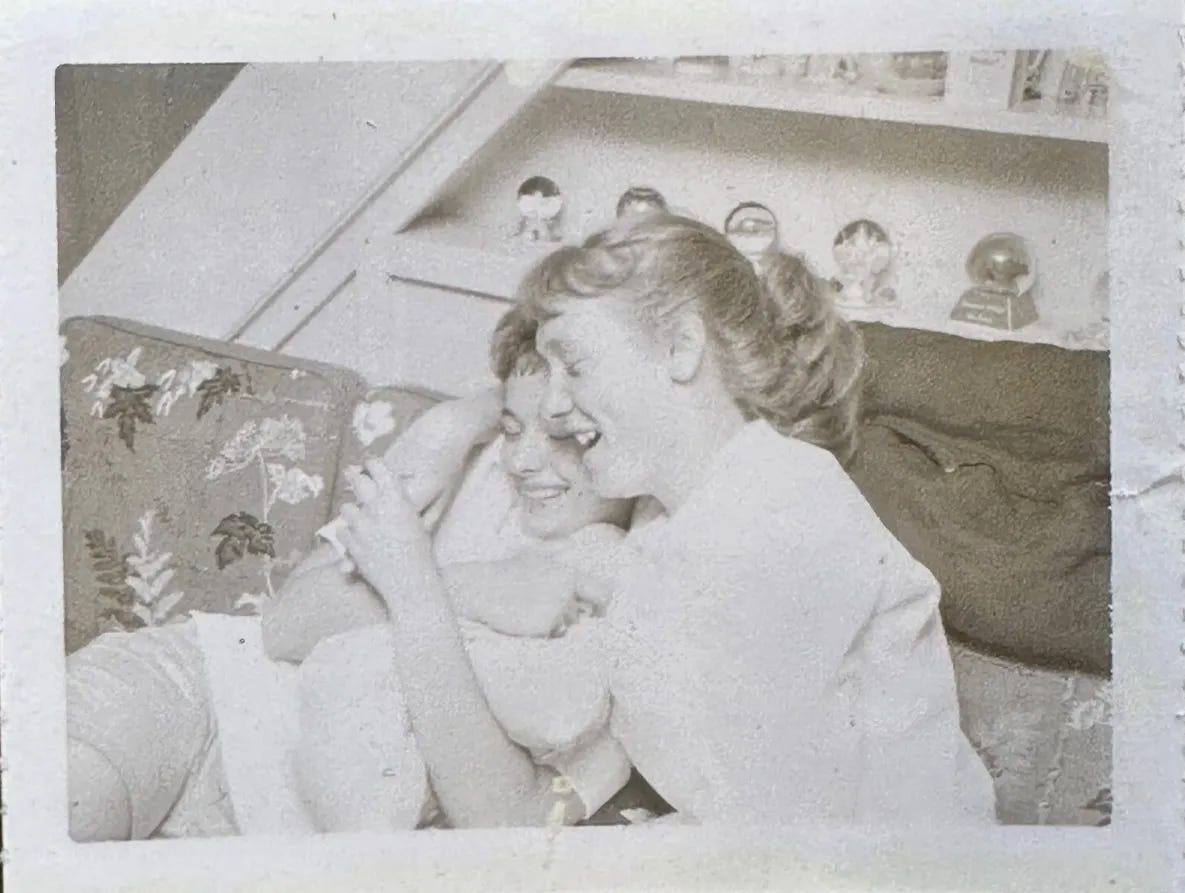
When Americans like Ida and Ned started road-tripping after World War II, souvenir shops popped up along highways and tourist hotspots, hawking snow globes and other mementos. “They were kitschy and reminded people of places visited as well as trips gone by,” says Andy Zito, a collector who owns more than 11,500 snow globes, which he showcases in an online museum. “They also [could be] displayed easily together for a fun conversation area of your house or apartment.”
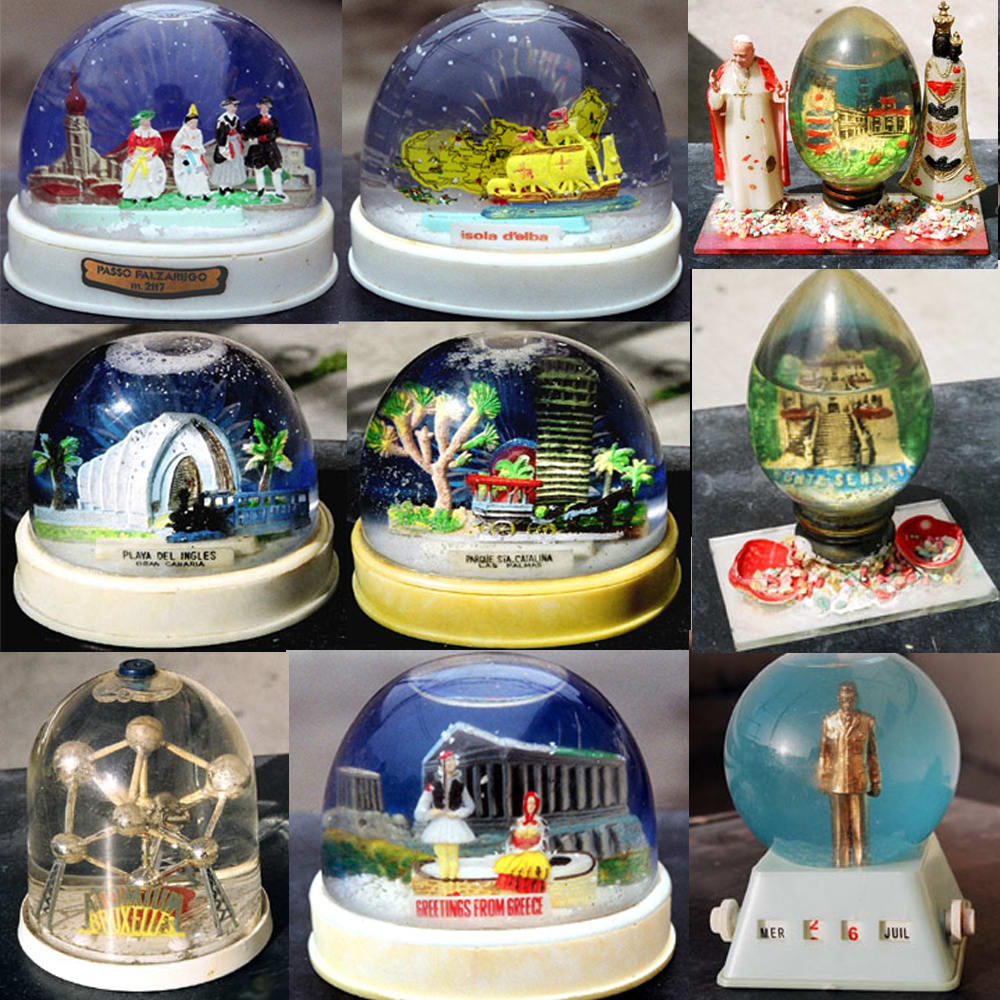
While early globes were made of glass, mid-century ones were often fashioned from newfangled molded plastic, making them more affordable and, sometimes, cornier. Ida had several with ladybug-sized figures balancing on weensy seesaws: a donkey and a hillbilly in front of the Missouri State Capitol, a pair of alligators teetering in a mini Louisiana bayou.
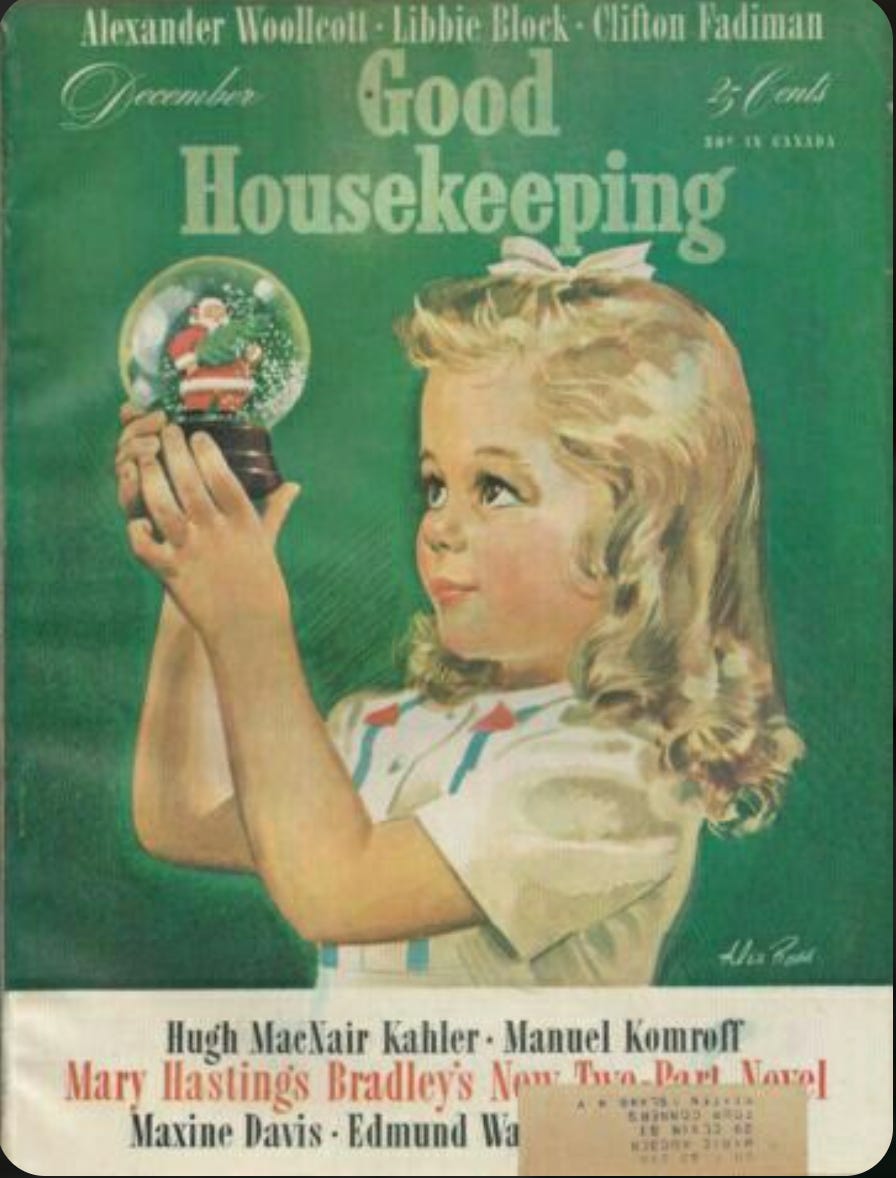
Like souvenir T-shirts or holiday tree ornaments, snow globes serve as markers of a well-traveled life, both distillations of memories and tokens signaling that you have been somewhere, even if it was just the state park down the road. Their nostalgic power was so great that Orson Welles famously used one in the 1941 movie “Citizen Kane” to symbolize lost youth and the grip of memory.
The modern art of the snow globe
Like many souvenirs, snow globes have morphed with the times, from low-cost airport shop/roadside attraction trinkets made of plastic and glitter to glamorous, collectible glass balls. Louis Vuitton and other luxury retailers now produce globes featuring shopping bags or flagship stores in never-ending winter storms.

Makers like CoolSnowGlobes are creating not only souvenirs but diminutive works of art for tabletop or bookshelf: the New York City skyline rendered in rainbow hues, a Thai-style golden Buddha which—with a flip of the wrist— becomes engulfed in gilded confetti. “There are so many technical considerations when you make a snow globe,” CoolSnowGlobes’ Ross says. “For example, normal perspective does not occur in a globe. A cube that would normally get smaller to the eye as it recedes actually gets bigger and wider, so we have to do a lot of compensating when working with certain shapes. The round glass filled with water acts as a fish-eye lens both enlarging things and distorting them.”
Ross’s globes are baseball-sized, but gift shop globes are often smaller—think the diameter of a golf ball—to comply with airplane carry-on restrictions.
Snow globes in pop culture
Pop culture still utilizes the memory-in-a-bottle nature of snow globes. In the video for Taylor Swift’s song “Lover,” a snow globe comes romantically to life. Married artists Walter Martin and Paloma Muñoz turn their fascination with winter into limited-edition snow globes and a work called “Utopia Work Station” that invites viewers to sit in a life-sized globe. In the 2002 thriller film “Unfaithful,” Richard Gere bludgeons his wife’s lover with a fancy snow globe.
Ida would’ve been aghast at the idea of using a snow globe as a weapon. But I thought of her during the trip I just took back to San Antonio, where I grew up. At a downtown gift shop, I spotted a tiny snow globe containing a mini Alamo and an ant-sized longhorn cow. I tilted it over and back upright.
White flakes engulfed the idealized scene, and suddenly I was a Texas kid again, traipsing through the musty, stony walls of the Alamo with my family.
Oh, except that blizzard. The average annual snowfall in San Antonio is under an inch.